The importance of equipment availability
Even the most carefully developed prevention strategy can be undermined if appropriate equipment is unavailable when required.
Healthcare organisations should consider:
- Availability of different mattress types for varying clinical requirements.
- Processes for accessing specialist pressure care equipment.
- Equipment inspection, maintenance and replacement.
- Staff training in correct product use.
- Communication between clinical teams and procurement departments.
- Contingency arrangements when patient needs change.
Working with a healthcare equipment supplier that understands these requirements can help organisations plan their pressure area care provision more effectively.
As both a manufacturer and distributor, Renray Healthcare works with healthcare providers to supply pressure area care equipment, profiling beds and patient seating, supporting the wider practical requirements of patient care.
The key message: Prevention works best when clinical knowledge, equipment availability and communication come together.
- Environmental Moves: Why the Bed and Chair Matter Too
Although the mattress is central to pressure management in bed, the surrounding care environment can also influence patient safety, comfort and independence.
The relationship between mattresses, profiling beds and patient seating is particularly important.
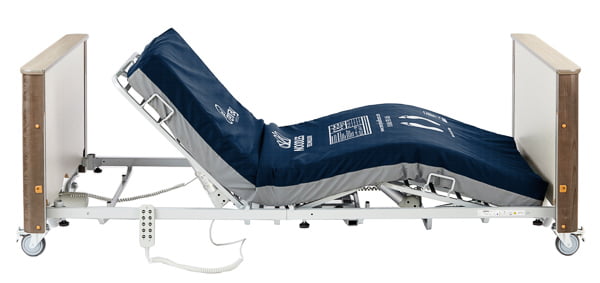
Profiling beds and patient positioning
A profiling bed can support patients and carers by allowing adjustments to different sections of the bed.
Depending on the individual’s requirements, these adjustments may assist with:
- Positioning for comfort and care.
- Supporting appropriate sitting positions.
- Facilitating certain transfers and care activities.
- Adjusting bed height to assist staff and patients.
- Supporting independence where clinically appropriate.
However, bed positioning must be considered carefully.
For example, raising the head section of a bed can increase shear forces if a patient slides down the mattress. This is particularly important for individuals at increased risk of pressure damage.
Correct positioning techniques, compatible equipment and clinical assessment remain essential.
Pressure care doesn’t stop when someone leaves the bed
Patients who spend extended periods sitting may also be vulnerable to pressure damage, particularly around the buttocks, sacrum and other weight-bearing areas.
Suitable patient seating can help support posture and positioning, but the chair must be appropriate for the individual’s needs.
Factors to consider include:
- Seat dimensions and postural support.
- Pressure redistribution requirements.
- Ability to reposition independently.
- Tilt-in-Space functionality where appropriate.
- Compatibility with patient transfer equipment.
- Ease of cleaning and maintenance.
Renray’s range of healthcare recliners includes options designed to support different patient seating and positioning requirements.
When selecting seating, healthcare professionals should consider the complete care plan, including time spent sitting, pressure redistribution and the patient’s ability to change position.
The key message: Pressure ulcer prevention should consider the patient’s entire day, not just the time they spend in bed.
- Smart Moves: Using Innovation and Education to Improve Prevention
Pressure area care technology continues to evolve, offering healthcare professionals a wider choice of equipment for different clinical needs.
Developments in foam design, alternating air systems, mattress construction and specialist seating can help support more individualised care.
However, innovation should always be considered alongside evidence, education and correct product use.
The importance of understanding mattress technology
A mattress can only perform as intended when it is suitable for the patient and used correctly.
For example:
- Static foam mattresses must provide appropriate support without excessive compression or bottoming out.
- Alternating air mattresses require correct setup, functioning pumps and appropriate settings in accordance with manufacturer instructions.
- Bariatric mattresses must be compatible with the patient’s weight, dimensions and bed frame.
- Mattress covers must be inspected for damage and cleaned according to the manufacturer’s guidance.
Staff should also understand when equipment needs to be reassessed or escalated to a specialist.
Innovation is about solving problems
At Renray Healthcare, we recognise that innovation should deliver practical benefits for patients and healthcare professionals.
Our pressure area care range includes established foam and alternating air systems alongside alternative technologies such as Noodles Technology.
Providing different options helps healthcare organisations consider solutions that suit their patient population, clinical requirements and care environment.
But equipment alone is not enough.
Training, product knowledge and consistent implementation are essential to achieving the intended benefits.
The key message: The best technology is technology that is appropriately selected, correctly used and supported by knowledgeable staff.
- Patient Moves: Empowering Patients and Carers
One of the most important aspects of pressure ulcer prevention is helping patients and carers understand their own role in reducing risk.
Where possible, patients should be encouraged to participate in decisions about their care and supported to maintain safe movement and independence.
This may involve helping individuals understand:
- Why changing position regularly is important.
- How to recognise and report changes in skin condition.
- Why discomfort or persistent pressure should be reported.
- How to use their bed or seating equipment safely.
- When to ask for assistance with repositioning.
- Why nutrition, hydration and skin care matter.
For individuals who cannot reposition independently, carers and healthcare professionals play a particularly important role.
Clear communication and education can help patients and families recognise potential problems earlier and understand the reasons behind preventive care.
Supporting independence through equipment
Appropriately selected profiling beds and patient seating can also support independence by making certain movements and daily activities easier for suitable individuals.
For example, adjustable bed positioning may help some patients participate in everyday activities, while appropriately specified seating can support comfort and time spent out of bed.
These benefits must always be balanced against the individual’s clinical needs and safety.
The key message: Patients and carers should be active participants in pressure ulcer prevention wherever possible.
Bringing It All Together: A Complete Approach to Pressure Ulcer Prevention
Effective pressure ulcer prevention is not achieved through one product, one assessment or one intervention.
It requires several elements working together.
| Prevention element |
Role in patient care |
| Pressure redistribution mattresses |
Help manage pressure while the patient is lying down |
| Profiling beds |
Support positioning, transfers and care activities |
| Patient seating |
Supports appropriate sitting positions and comfort |
| Clinical assessment |
Identifies individual risk and equipment requirements |
| Movement and repositioning |
Helps reduce sustained pressure on vulnerable areas |
| Education and teamwork |
Supports consistent prevention practices |
| Patient involvement |
Encourages awareness, communication and independence |
A mattress is an essential component of many pressure ulcer prevention strategies, but it cannot address every risk on its own.
The greatest benefits come from combining appropriate equipment with evidence-based clinical practice, effective communication and person-centred care.
Supporting Pressure Ulcer Prevention with Renray Healthcare
At Renray Healthcare, we understand that every patient and every care environment has different requirements.
Our range of healthcare solutions includes:
- Static foam mattresses for appropriate everyday pressure care requirements.
- Alternating air mattresses providing dynamic pressure redistribution.
- Bariatric mattresses designed for individuals requiring specialist support.
- Noodles Technology mattresses offering an alternative pressure care solution.
- Profiling beds to support positioning and everyday care activities.
- Patient recliners and seating for a range of comfort, mobility and positioning requirements.
By offering a broad range of products, we aim to help healthcare organisations identify practical solutions that meet their clinical, operational and budgetary needs.
As we support Stop the Pressure Week 2026, we encourage healthcare professionals, care providers and patients to consider the wider picture of pressure ulcer prevention.
Because the right mattress matters — but so does everything around it.
Looking to review your pressure area care equipment?
Whether you’re considering new mattresses, profiling beds or specialist patient seating, the Renray Healthcare team is happy to discuss your requirements and help you explore the options available.
Contact Renray Healthcare to learn more about our pressure area care solutions.